Posts

Showing posts with the label Articles/Writings

The What and Why of Color Space
Image
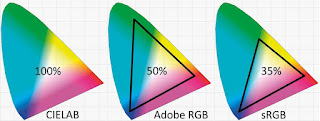
 What is Color Space? If you've browsed the Photo Shooting settings menu of your dslr, you've likely seen a setting for Color Space. Unless you have some super-special video camera, you'll see two choices, sRGB, the factory default setting on most dslrs, and Adobe. In my Nikons, the designation is visible in the file name. sRGB Color Space is saved as DSC_nnnn (the underscore in the middle) while Adobe Color Space is saved as _DSCnnnn (underscore at the beginning). unless, of course, you have changed the file name designation yourself. (I did alter my file name settings so that the file names on my D3200 are DSC and my Z50's file names are ZSC. My purpose for this is so that I can combine photos from both cameras into one folder and tell at a glance which camera they came from. File name makes no difference in editing processes.) Why the Color Space you choose is important. Most monitors and screens display only the spectrum of the sRGB color space. Wh...
Portrait or landscape orientation for landscapes?

Image
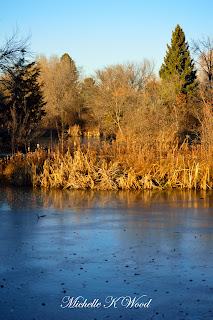
 It may seem like a funny question. Landscape orientation, in which your photo is wider than it is tall, is for landscapes, right? Portrait orientation in which your photo is taller than it is wide, is for, well, portraits and people! I invite you to try new things! Especially if there is a particular landmark feature you're trying to highlight in your composition. Honestly, I thought everyone did this but I'm learning it's rare that photographers turn their cameras on the side and take landscape photos in portrait orientation. Here are two photos of the same landscape, one in landscape orientation and one in portrait. Check them out and see what you think! If it looks like something fun to play with, try it next time you're out! Composition tip: The way to get that sapphire colored water, actually it's ice in these photos...not editing in post! It's in the timing: be on location in the late afternoon or evening, take the photo when the sun is behind you and...

Warming Up For Photography

Image
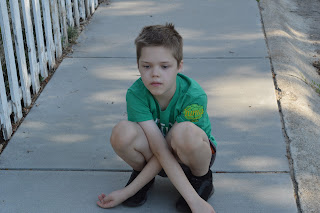
Warm-up exercises are a great practice to add to any regular routine or task you do! Photography Yoga? No, just my grandson wishing I'd hurry up taking floral macros so we could continue our walk!  I hadn’t thought about this until seeing a recent article for artists that suggested drawing circles, squares, triangles, wavy shapes and straight lines as warm-up exercises. This is not only for the eye, but the fingers and wrists as well as mental coordination. It makes so much sense, and yet unless you’re a football player or an opera singer, probably no one has ever made the ‘warm up’ suggestion to you. What does this mean for photographers? We need to get creative. I shoot nature and conservation photos, figuring out what kind of warm up goes with that just took a bit of observation. I’m up and down a lot, getting close to small plants and insects on the ground, so some knee-flexing is a good warm up for me. Stretches that loosen up my shoulders are beneficial since I’m swing...

Great Photos Take Great Planning

Image
Great photos take great planning. Not necessarily elaborate or complicated, but definitely great attention to detail. Here are some tips for planning three popular styles of photography, closeups, landscapes, and portraits. Closeups – bokeh. The whole point behind a closeup is the attention to the detail of your subject. You can emphasize that by creating a nice background blur so the background does not draw attention away from your subject. Be close to your subject and use a low f-stop (wide-open aperture) to create nice bokeh/blur. The other thing you can do with a closeup is to fill the frame with the subject so you don't have to worry about background at all. Landscape – leading lines. Landscapes are an opportunity to take the viewer on an adventure, to explore all the nooks and crannies laid out before them. Try for an anchoring detail in the foreground and leading lines to extend through the adventure. Landscapes typically don't want bokeh/blur, so use a high f-stop...

Stop looking for interesting things, make things interesting!

Image
Pretty frequently, I hear photographers lamenting that they can't find anything interesting to shoot. The best advice I ever received as a tog was 'don't look for interesting things, make things look interesting." - Joel Sartore in his Fundamentals of Photography courses.  Purchase Joel Sartore's courses - especially excellent for beginners - online: Order DVD or watch online directly from The Great Courses. I do not receive a fee when you purchase directly from TGC. Fundamentals of Photography I Fundamentals of PhotographyII Sign up for The Great Courses Signature Collection, a monthly-fee video watching service. I receive a small affiliate fee on Amazon purchases. Fundamentals of Photography I Fundamentals of PhotographyII When you’re out shooting and not finding anything that jumps out at you as interesting or photo-worthy, here are a few tips to use to Make them interesting: Photos featured in this article are a few of my stock photos on Dreamstime.      Ref...

Expose Your Triangle – Shutter Speed

Image
It’s called the Exposure Triangle….and seems to be one of the most confusing things in photography. So, what is it anyway? The exposure triangle is three settings that go hand-in-hand that let you create amazing photos: ISO, Shutter Speed, and Aperture. Today, I’ll cover Shutter Speed. You can think of this in terms of ‘how fast can you blink’ and ‘how much can you see when you blink fast vs slow.’ Although this diagram isn't in triangle format, it clearly shows the effects of fast and slow shutter speeds. Shutter Speed is about movement and what movement or stillness you can capture by adjusting the setting. If you blink fast, things tend to stand still, to be stationary. If you blink slowly (keeping your view straight ahead as your camera does), things tend to pass through your vision quickly and often at a blur. The important principle to remember when you are changing shutter speed is that a fast shutter speed will freeze action but also lets in a lower amount of l...

Expose Your Triange – ISO

Image
 Does anybody even know what ISO means? A few, maybe!   The acronym stands for International Standards Organization. It started out as an industry standard scale for measuring the sensitivity of film to light. If you’re an old-time photographer who used film cameras, you’ll recall that the films you purchased were rated: ISO 100 for bright outdoor light, ISO 200 for cloudy days, and even ISO 400 for evening and inside (but you likely still needed a flash).   Today, that ISO rating is applied to the sensor on your DSLR (digital single lens reflex) camera. If you’ve ever looked inside the body of your camera when the lens is off, you can see the sensor at the back of the body. When you push the shutter and the curtains open and pass across the sensor, it captures the light bouncing off the surfaces you are pointing at and captures the image.  You can learn more about that in your owner’s manual if interested. Basically, setting ISO tells your camera how much light...

Expose Your Triangle - Aperture

Image
  It’s called the Exposure Triangle….and seems to be one of the most confusing things in photography although it shouldn’t be! So, what is it anyway? The exposure triangle is three settings that go hand-in-hand that let you create amazing photos: ISO, Shutter Speed, and Aperture. Today, I’ll cover Aperture. Ninety-nine percent of the time, I shoot in Aperture Mode on my Nikon D3200 because my general area of interest is floral closeups and landscapes – talk about being on opposite ends of the spectrum! – so I do a lot with Depth of Field. Aperture is the size of the opening of your lens. I’ll not go into what all the stops mean, but aperture is measured in f-stops  It seems counter-intuitive, but low number = wide open lens, high number = very small opening in lens. Depending on your lens, it can be a very low number (wide-open) f1.4 or very high number (barely open) f32. Think of it like a cat’s eye: When the pupils of a cats eyes are wide open, they let in a lot of ...